



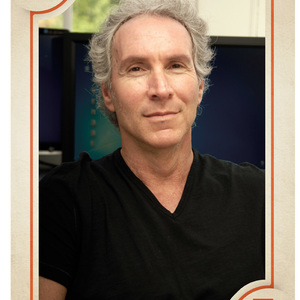

Mark D. Alicke
My main research interests are in how people construct their identities and maintain relatively favorable self-views, and in the processes by which negative evaluations of people and their behavior are translated into ascriptions of blame and the imposition of sanctions. Topics I have studied in the self-enhancement area include the "better-than-average" effect (the tendency for people to evaluate themselves more positively than an average peer on most characteristics), and the genius effect (the tendency for people to exaggerate the abilities of those who outperform them).
With regard to identity construction, my students and I are conducting research on the "local dominance effect," which is the finding that people define their abilities with reference to their standing in relation to a few immediately present peers, and largely ignore far more valid data about their general standing in relevant populations.
My research in the area of blame and responsibility stems from my "culpable control" model of blame. The culpable control model assumes that people generally adhere to cultural prescriptions for assigning blame (i.e., assessing intention, causation, foresight and mitigating circumstances) but are also influenced by their automatic evaluations of the actors involved, their behaviors, and the outcomes that occur. When negative evaluations are strong, observers assess the evidence from a "blame validation" vantage, in which they exaggerate the strength of evidence that supports a blame attribution, deemphasize contradictory evidence, or change the threshold for how strong the evidence must be for assigning blame.
Primary Interests:
- Causal Attribution
- Judgment and Decision Making
- Law and Public Policy
- Person Perception
- Self and Identity
- Social Cognition
Note from the Network: The holder of this profile has certified having all necessary rights, licenses, and authorization to post the files listed below. Visitors are welcome to copy or use any files for noncommercial or journalistic purposes provided they credit the profile holder and cite this page as the source.
Image Gallery
Books:
- Alicke, M. D., Dunning, D. A., & Krueger, J. I. (Eds.). (2005). The self in social judgment. New York: Psychology Press.
- Alicke, M. D., & Sedikides, C. (Eds.). (2010). Handbook of self-enhancement and self-protection. new York: Guilford Press.
Journal Articles:
- Alicke, M. D. (2000). Evaluating social comparison targets. In J. Suls & L. Wheeler (Eds.), Handbook of Social Comparison: Theory and Research. NY: Plenum Publishing.
- Alicke, M. D., Klotz, M. L., Breitenbecher, D. L., Yurak, T. J., & Vredenburg, D. S. (1995). Personal contact, individuation and the better than average effect. Journal of Personality and Social Psychology, 68, 804-825.
- Alicke, M. D., LoSchiavo, F. M., & Buckingham, J. T. (2000). Attitude transference. Social Cognition, 18, 1-34.
- Alicke, M. D., LoSchiavo, F. M., Zerbst, J. I., & Zhang, S. (1997). The person who outperforms me is a genius: Esteem maintenance in upward social comparison. Journal of Personality and Social Psychology, 73, 781-789.
- Alicke, M. D., & Sedikides, C. (2009). Self-enhancement and self-protection: What they are and what they do. European Review of Social Psychology, 20, 1-48.
- Alicke, M. D., Vredenburg, D. S., Hiatt, M., & Govorun, O. (2001). The “better than myself effect.” Motivation and Emotion, 25, 7-22. Special Issue on Motivation and the Self.
- Alicke, M. D., & Zell, E. (2009). Social attractiveness and blame. Journal of Applied Social Psychology, 39, 2089-2105.
- Alicke, M. D., Zell, E., & Bloom, D. (2010). Mere categorization and the frog pond effect. Psychological Science, 2, 174-177.
- Buckingham, J. T., & Alicke, M. D. (2002). The influence of individual versus aggregate social comparison information on self-evaluations. Journal of Personality and Social Psychology, 83, 1117-1130.
Other Publications:
- Alicke, M. D. (2000). Evaluating social comparison targets. In J.Suls & L. Wheeler (Eds.), Handbook of Social Comparison: Theory and Research. NY: Plenum Publishing.
Courses Taught:
- Introductory Psychology
- Social Psychology
- The Self in Social Judgment
Mark D. Alicke
Department of Psychology
229 Porter Hall
Ohio University
Athens, Ohio 45701
United States of America
- Phone: (740) 593-1068
